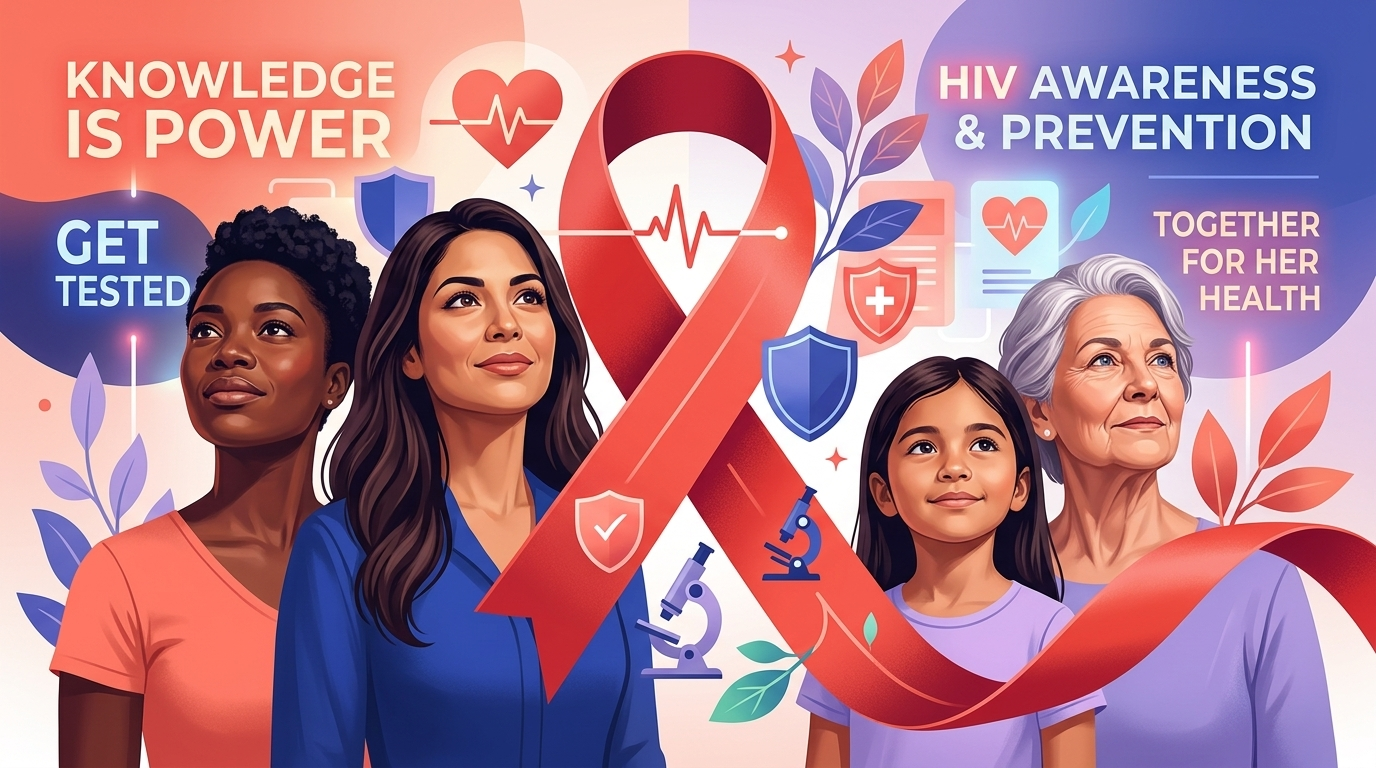
National Women and Girls HIV/AIDS Awareness Day (NWGHAAD) is observed annually on March 10. This nationwide public health observance brings critical attention to the unique impact that the Human Immunodeficiency Virus (HIV) and Acquired Immunodeficiency Syndrome (AIDS) have on women and adolescent girls across the United States. Coordinated by the Office on Women's Health (OWH) within the U.S. Department of Health and Human Services (HHS), NWGHAAD serves as a vital platform to empower individuals with knowledge, eradicate social stigma, encourage routine testing, and highlight accessible prevention and treatment options.
While substantial progress has been made in HIV prevention and medical treatment over recent decades, thousands of women and girls continue to acquire HIV every year. NWGHAAD unites community leaders, healthcare providers, public health officials, and advocates to emphasize that women remain vulnerable to HIV infection and that targeted, compassionate, and gender-responsive care is essential to ending the epidemic.
History and Evolution of NWGHAAD
National Women and Girls HIV/AIDS Awareness Day was first established in March 2006 by the Office on Women's Health. The initiative was created in response to a growing realization among public health researchers: women were increasingly representing a larger proportion of HIV diagnoses, yet public health campaigns and medical research had historically centered predominantly on men.
During the early decades of the HIV epidemic, women were frequently overlooked in diagnostic criteria, clinical trials, and outreach campaigns. This gap led to delayed diagnoses, poorer health outcomes, and a widespread misconception that HIV was not a significant threat to women's health. The establishment of NWGHAAD helped shift the national conversation, ensuring that federal agencies, local clinics, and community organizations dedicated specific resources to education, outreach, and clinical research focused entirely on women and girls.
The Current Reality: HIV/AIDS and Women Today
Understanding the current epidemiological landscape is essential to recognizing why dedicated awareness days remain vital. According to data from the Centers for Disease Control and Prevention (CDC), women account for approximately 19% to 20% of all new HIV diagnoses in the United States annually.
To fully grasp how HIV impacts women, public health specialists look at transmission vectors, racial disparities, and socio-economic factors:
1. Modes of Transmission
The primary mode of HIV transmission among women in the United States is heterosexual contact. More than 80% of women living with HIV acquired the virus through sexual intercourse with a male partner whose HIV status was either positive or unknown. Injecting drug use (IDU) represents the second most common vector of transmission among women, accounting for approximately 15% to 18% of diagnoses.
2. Disproportionate Racial and Ethnic Disparities
HIV does not affect all groups of women equally. Structural inequalities, systemic racism, unequal access to quality healthcare, and socio-economic disparities have created severe health inequities:
- Black/African American Women: Black women are disproportionately impacted by HIV compared to women of other racial and ethnic backgrounds. Despite making up a smaller percentage of the overall female population, Black women account for nearly half of all new HIV diagnoses among women in the U.S.
- Hispanic/Latina Women: Hispanic and Latina women are also disproportionately affected, accounting for approximately 20% of new female HIV diagnoses. Language barriers, cultural stigma, and immigration status can sometimes create additional obstacles to receiving preventative care or early treatment.
3. Age Demographics and Biological Vulnerabilities
Adolescent girls and young women aged 13 to 24 face unique biological and social challenges. Biologically, adolescent females are more susceptible to STI transmission due to tissue vulnerability in the reproductive tract. Socially, peer pressure, lack of comprehensive sex education, and power dynamics within relationships can make it harder for young women to negotiate condom use or seek medical testing independently.
Additionally, older women (aged 50 and above) represent a growing segment of women living with HIV. Older adults may misinterpret early symptoms of HIV as general signs of aging or menopause, leading to late-stage diagnoses.
Biological and Socio-Economic Risk Factors for Women
Women face a distinct combination of biological, social, and economic factors that increase their risk of contracting HIV and hinder their access to consistent healthcare.
Biological Susceptibility
During heterosexual intercourse, transmission of HIV from a male to a female is biologically more efficient than from a female to a male. The mucosal lining of the vagina provides a larger surface area exposed to viral fluid, and micro-tears during sex can create direct pathways for the virus to enter the bloodstream.
Gender-Based Violence and Intimate Partner Violence (IPV)
Research consistently demonstrates a strong connection between Intimate Partner Violence (IPV) and HIV risk. Women experiencing physical, emotional, or sexual abuse within relationships are significantly less likely to be able to negotiate condom use or ask their partners about their sexual history. Furthermore, fear of retaliation or violence often prevents survivors of abuse from seeking routine medical care or taking daily preventative medications.
Economic Instability and Healthcare Access
Socio-economic factors such as poverty, lack of health insurance, homelessness, and unstable housing directly correlate with elevated HIV risks. Women who struggle to meet basic needs like shelter and food may prioritize immediate survival over preventative health screenings. Furthermore, implicit bias in healthcare settings can lead to women's symptoms being dismissed or practitioners failing to offer routine HIV screenings.
Prevention Strategies and Medical Advancements
Modern medicine has provided effective tools to prevent HIV transmission and manage the virus for those who are diagnosed. Understanding and disseminating information about these resources is a cornerstone of NWGHAAD.
1. Pre-Exposure Prophylaxis (PrEP)
PrEP is a daily oral pill or long-acting injectable medication taken by individuals who are HIV-negative to prevent acquiring the virus. When taken as prescribed, PrEP reduces the risk of contracting HIV through sex by approximately 99%. Despite its remarkable efficacy, awareness and uptake of PrEP among women remain low. Many women—and even some healthcare providers—incorrectly believe that PrEP is only intended for men, representing a major public health awareness gap.
2. Post-Exposure Prophylaxis (PEP)
PEP is an emergency medication taken within 72 hours after potential exposure to HIV (such as after an unprotected sexual encounter, a broken condom, or a sexual assault). When started promptly and taken for 28 days, PEP can prevent the virus from taking hold in the body.
3. Undetectable = Untransmittable (U=U)
One of the most revolutionary milestones in modern HIV medicine is the principle of U=U (Undetectable = Untransmittable). Antiretroviral therapy (ART) allows people living with HIV to reduce the amount of virus in their blood to undetectable levels. Scientific consensus confirms that an individual who maintains an undetectable viral load through consistent ART medication cannot transmit HIV to a sexual partner. This concept has transformed lives, significantly reduced internal and societal stigma, and empowered women living with HIV to pursue healthy relationships and pregnancy.
4. Perinatal Transmission Prevention
Advances in HIV care have made mother-to-child (perinatal) transmission virtually preventable. With early diagnosis and proper antiretroviral treatment during pregnancy and delivery, the risk of a mother passing HIV to her baby drops to less than 1%. Routine prenatal screening ensures that pregnant women living with HIV receive the care needed to protect their own health and deliver healthy, HIV-negative babies.
Overcoming Stigma and Mental Health Challenges
Despite medical progress, social stigma remains one of the greatest obstacles in the fight against HIV/AIDS. Stigma creates feelings of shame, isolation, and fear, often discouraging women from getting tested, sharing their status with partners, or adhering to their treatment plans.
Women living with HIV frequently experience higher rates of depression, anxiety, and post-traumatic stress disorder (PTSD). Comprehensive care must go beyond prescribing antiretroviral drugs; it requires trauma-informed mental health care, supportive community groups, and safe healthcare environments where patients are treated with dignity and empathy.
How Communities and Individuals Can Action National Women and Girls HIV/AIDS Awareness Day
Observing NWGHAAD is not limited to public health institutions—everyone can take practical steps to advance awareness, encourage safety, and support women in their communities.
- Get Tested Regularly: Make HIV screening a standard component of your annual wellness exam or reproductive health visits. Knowing your status is empowering and protects both you and your partners.
- Discuss PrEP and Prevention Options: Speak with a healthcare provider about whether PrEP or PEP is appropriate for your lifestyle and health needs.
- Promote Accurate Information: Use social media platforms, community forums, and workshops to share facts about HIV transmission, U=U, and preventative options using official awareness tags like #NWGHAAD.
- Challenge HIV Stigma: Speak out against judgment, harmful myths, and discriminatory jokes or language regarding HIV. Reframing HIV as a manageable health condition helps create supportive environments for those living with the virus.
- Support Local Clinics and Organizations: Donate time or funds to local health centers, women's shelters, and advocacy groups that offer free HIV testing, counseling, and reproductive health services to underserved populations.
Looking to the Future: Ending the Epidemic for Women
The goal of ending the HIV epidemic by 2030 requires that no woman or girl is left behind. Achieving this objective demands equal distribution of medical breakthroughs, culturally competent healthcare services, expanded access to PrEP, and policy efforts focused on reducing socio-economic inequalities.
National Women and Girls HIV/AIDS Awareness Day reminds us that awareness is the first step toward action. By elevating the voices of women living with HIV, funding targeted healthcare initiatives, and fostering open dialogue, society can move closer to a future free from the burden of HIV/AIDS.