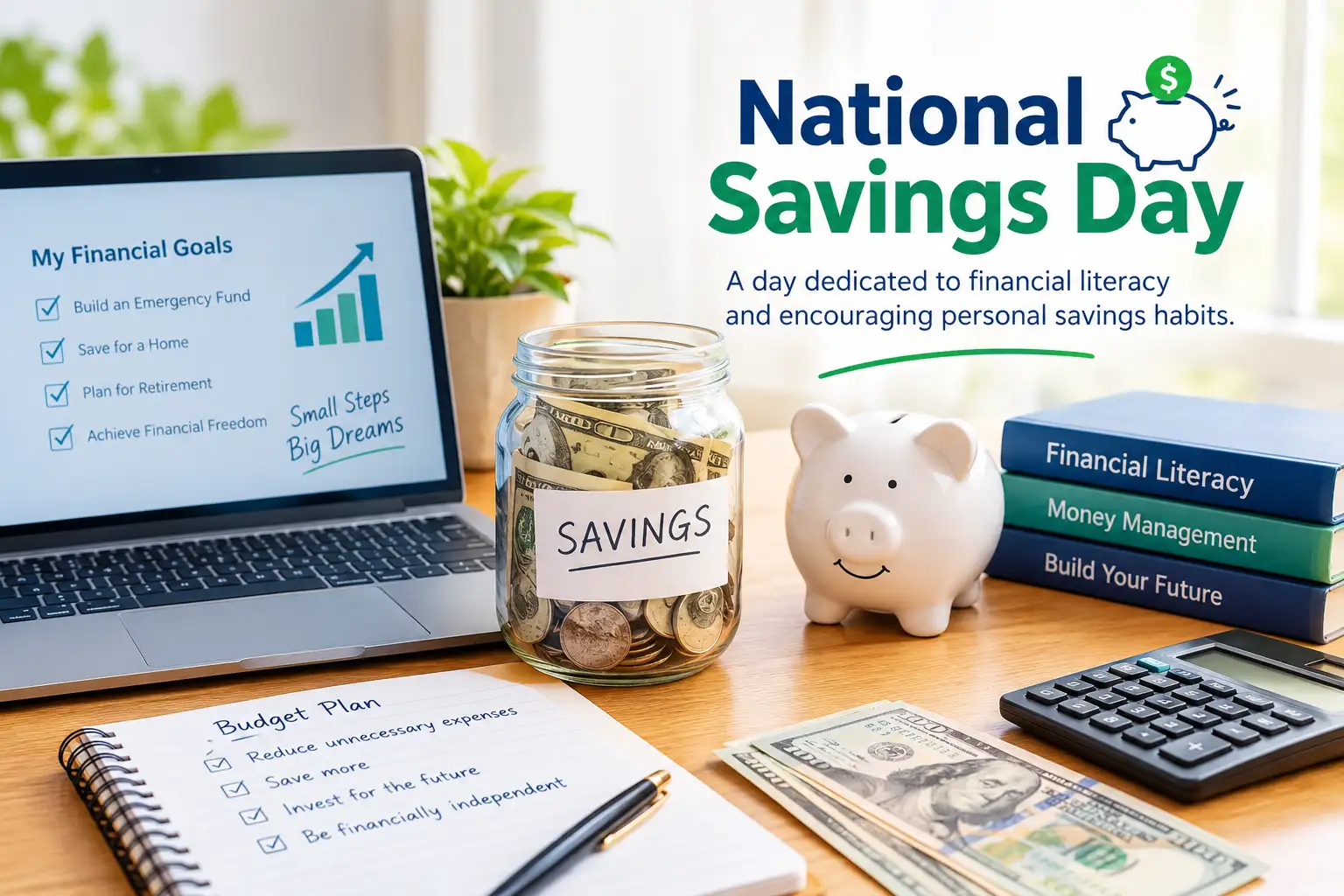
National Savings Day: A Day to Build Better Saving Habits
National Savings Day is observed on October 12 in the United States. The day highlights the importance of saving money, improving financial literacy, and developing practical habits that can make it easier to prepare for the future.
Saving does not always require a large income or major lifestyle changes. Small, consistent actions can make a meaningful difference over time. National Savings Day provides an opportunity to review your spending, set realistic financial goals, and make saving a regular part of your financial routine.
When Is National Savings Day?
National Savings Day is celebrated every year on October 12. It is an observance focused on encouraging people to think about their savings, financial goals, and everyday money habits.
October is also recognized for several financial awareness initiatives in the United States. The American Bankers Association's consumer awareness calendar lists National Savings Day on October 12 as part of its annual financial awareness observances. :contentReference[oaicite:1]{index=1}
What Is National Savings Day?
National Savings Day is a financial awareness observance that encourages people to develop healthier saving habits and become more confident in managing money.
The idea is simple: saving money is not only about putting away a large amount at once. It can begin with small, regular decisions such as setting aside part of a paycheck, reducing unnecessary expenses, building an emergency fund, or creating a specific savings goal.
National Savings Day was founded by Capital One to encourage people to feel more confident about saving and to make saving a more natural part of everyday financial behavior. National Day Calendar records the observance as beginning annually in 2017. :contentReference[oaicite:2]{index=2}
Why Is National Savings Day Important?
Saving money can provide a financial cushion when unexpected expenses arise. A savings fund may help with situations such as an unexpected medical bill, car repair, temporary loss of income, or another urgent expense.
Financial literacy is an important part of this process. Understanding budgeting, saving, interest, credit, debt, and financial risk can help people make more informed decisions about their money. The U.S. Office of the Comptroller of the Currency's updated financial literacy strategy also emphasizes saving and investing, youth financial capability, digital financial literacy, and protection against scams and fraud. :contentReference[oaicite:3]{index=3}
National Savings Day therefore provides a useful reminder that financial security is often built through consistent habits rather than a single financial decision.
How to Celebrate National Savings Day
You do not need to spend money to celebrate National Savings Day. Instead, use the day as an opportunity to take one practical step toward improving your financial situation.
1. Set a Savings Goal
Start with a specific goal. You might want to save for an emergency fund, a vacation, education, a home, a vehicle, or another major expense.
A specific goal is easier to work toward than simply deciding to "save more money." Determine how much you need, when you need it, and how much you can realistically save on a regular basis.
2. Review Your Monthly Spending
Look through your recent expenses and identify where your money is going. Separate essential expenses from purchases that are optional or unnecessary.
Even small recurring expenses can add up over time. Reviewing subscriptions, dining expenses, entertainment costs, and impulse purchases may reveal opportunities to redirect some money toward savings.
3. Automate Your Savings
One of the simplest ways to develop a consistent saving habit is to automate transfers to a savings account. Setting up an automatic transfer after payday can make saving more consistent because the money is moved before it is easily spent.
Automatic saving is also one of the practical strategies recommended in National Savings Day guidance. :contentReference[oaicite:4]{index=4}
4. Build an Emergency Fund
An emergency fund can help you handle unexpected expenses without immediately relying on credit cards or loans.
There is no single emergency-fund amount that works for everyone. Your target should reflect your income, essential expenses, family situation, job stability, and financial responsibilities. Start with an amount that is achievable and increase it gradually.
5. Reduce Unnecessary Expenses
Review expenses that do not provide much value to you. Canceling an unused subscription, preparing more meals at home, reducing unnecessary shopping, or comparing service plans can free up money for savings.
The goal is not to eliminate every enjoyable expense. A sustainable budget should allow room for both necessary spending and reasonable personal choices.
6. Learn More About Personal Finance
Use National Savings Day as a reason to improve your financial knowledge. Learn about budgeting, savings accounts, interest rates, credit scores, debt management, investing, and common financial scams.
Better financial knowledge can help you evaluate financial products more carefully and make decisions based on your own goals rather than short-term pressure or advertising.
Simple Saving Habits to Start Today
If you are new to saving, start small. You could transfer a fixed amount to savings every payday, save part of unexpected income, compare recurring bills, or establish a weekly spending limit.
The most important part is consistency. A modest amount saved regularly can become meaningful over time because you are developing a repeatable financial habit.
- Pay yourself first by setting aside money before discretionary spending.
- Track your income and expenses regularly.
- Set a realistic savings target.
- Automate recurring transfers when appropriate.
- Review subscriptions and recurring charges.
- Build an emergency fund gradually.
- Be cautious about unnecessary high-interest debt.
- Learn how interest, fees, and account terms affect your money.
National Savings Day and Financial Literacy
Saving and financial literacy are closely connected. Knowing how to create a budget is useful, but understanding why you are saving, where to keep your savings, how interest works, and how to recognize financial risks is equally important.
For example, a person comparing savings accounts should look beyond an advertised interest rate. Account fees, minimum balance requirements, withdrawal conditions, access to funds, and whether deposits are insured can also matter.
Current U.S. savings products can offer significantly different rates, so consumers should compare account terms and understand that interest rates can change. :contentReference[oaicite:5]{index=5}
National Savings Day for Families and Children
Saving is a valuable lesson for children and teenagers as well as adults. Parents and educators can use National Savings Day to introduce basic concepts such as earning, spending, saving, budgeting, and setting financial goals.
A child does not need to manage a large amount of money to learn these concepts. Simple activities such as dividing money between spending and saving, setting a goal for a desired item, or keeping a record of savings can help develop practical financial habits.
Frequently Asked Questions About National Savings Day
What date is National Savings Day?
National Savings Day is observed every year on October 12 in the United States.
What is the purpose of National Savings Day?
The purpose of National Savings Day is to encourage saving, financial awareness, and better money-management habits. It reminds people that even small and consistent savings can support future financial goals.
Who founded National Savings Day?
National Savings Day was founded by Capital One to encourage people to become more confident about saving and managing their money. National Day Calendar records the annual observance as beginning in 2017. :contentReference[oaicite:6]{index=6}
Is National Savings Day a federal holiday?
No. National Savings Day is a financial awareness observance, not a U.S. federal holiday. It is intended to promote saving and financial education rather than provide a day off from work or school.
How can I celebrate National Savings Day?
You can celebrate by reviewing your budget, setting a savings goal, starting or adding to an emergency fund, automating a savings transfer, reducing unnecessary expenses, or learning more about personal finance.
Why is saving money important?
Saving can help people prepare for unexpected expenses, work toward financial goals, reduce dependence on high-cost borrowing, and create greater financial flexibility.
Make Saving a Habit, Not Just a One-Day Goal
National Savings Day is a useful reminder to take control of your financial habits, but saving should not stop on October 12. The most valuable step is to turn one day's motivation into a routine that continues throughout the year.
Start with a realistic goal, save consistently, review your spending, and continue improving your financial knowledge. Whether you are building your first savings fund or working toward a major financial goal, small steps can help create a stronger financial foundation.