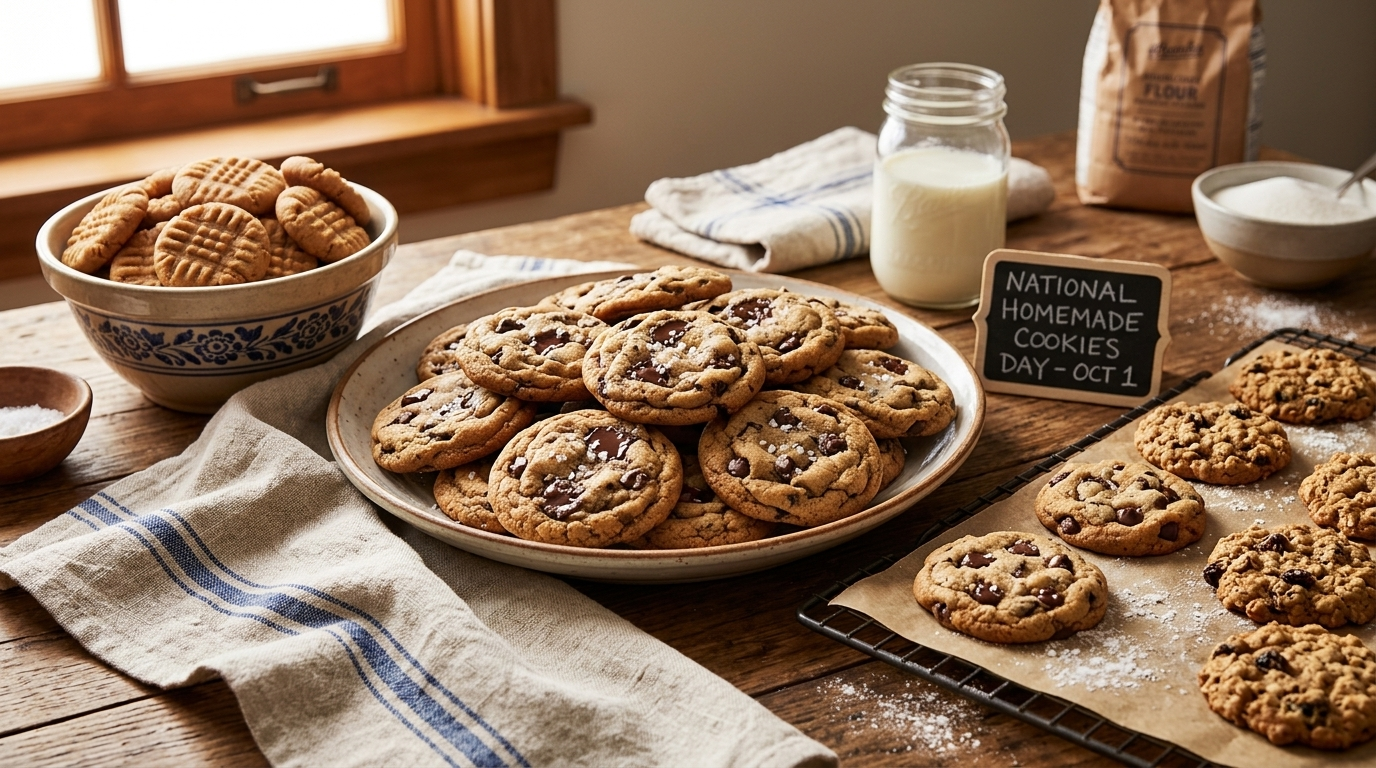
Why We Celebrate National Homemade Cookies Day
Every year on October 1st, dessert enthusiasts, home bakers, and families gather in kitchens around the world to celebrate National Homemade Cookies Day. There is something uniquely nostalgic and comforting about the process: measuring out ingredients, mixing dough, and breathing in the sweet aroma of freshly baked treats filling the home. While store-bought cookies offer convenience, nothing compares to the rich flavor, customizable textures, and tender crumb of a batch made entirely from scratch.
The Science of Baking the Perfect Cookie
Baking is equal parts culinary art and exact science. Understanding how individual ingredients interact can transform an average cookie into a bakery-quality masterpiece:
- Flour Ratio: All-purpose flour provides the ideal structure for most cookies. Too much flour results in dry, cake-like cookies, while too little causes them to spread excessively into thin, greasy disks.
- Sugars Matter: Brown sugar contains molasses, which adds moisture, chewiness, and a slight caramel flavor. Granulated white sugar encourages spreading and yields a crisper texture. Balancing the two gives you the best of both worlds.
- Fat Temperature: Melted butter creates dense, chewy cookies, whereas softened butter creamed with sugar traps air, giving you a fluffier, lighter result.
- Leavening Agents: Baking soda promotes browning and spread, while baking powder encourages rising and a soft, cakey texture.
3 Fundamental Rules for Cookie Success
- Use Room-Temperature Ingredients: Ensure butter, eggs, and dairy products are at true room temperature (~65°F–68°F). This allows them to form an emulsion that traps air evenly throughout the dough.
- Chill Your Dough: Resting dough in the refrigerator for at least 1 to 2 hours (or up to 24 hours) solidifies the fat and allows the flour to fully hydrate. Chilled dough spreads less in the oven, resulting in thicker, richer cookies with enhanced flavor depth.
- Master Oven Timing: Pull your baking sheet out of the oven when the edges are lightly set and golden brown, even if the centers still appear slightly soft or underbaked. They will continue to cook and firm up on the warm baking sheet for 5 to 10 minutes after leaving the oven.
Classic Homemade Recipes to Try Today
1. Ultimate Brown Butter Chocolate Chip
Elevate the classic chocolate chip cookie by browning your butter first. Gently melt butter over medium heat until it foams and turns a golden amber color with a nutty aroma. Let it cool slightly before mixing with dark brown sugar, vanilla bean paste, and high-quality semi-sweet chocolate chunks. Top each dough ball with a pinch of flaky sea salt before baking.
2. Soft-Baked Cinnamon Snickerdoodles
Snickerdoodles rely on cream of tartar for their signature tangy flavor and pillow-soft chew. Cream softened butter with granulated sugar, fold in your dry ingredients, and roll generous dough balls through a vibrant mixture of ground cinnamon and coarse sugar before baking.
3. Chewy Salted Peanut Butter Cookies
For a dense, rich texture, combine classic creamy peanut butter with dark brown sugar, butter, and an extra egg yolk. Use a fork to press the traditional cross-hatch pattern onto each cookie ball, which ensures even baking throughout the center.
Troubleshooting Common Baking Mistakes
- Cookies are too flat: Your butter was likely too warm or melted, or the oven temperature is too low. Try chilling your dough before baking the next tray.
- Cookies are tough or dry: Over-mixing the dough after adding flour develops excess gluten. Always mix just until the flour disappears.
- Unevenly baked bottoms: Dark or black baking sheets absorb excess heat and burn cookie undersides quickly. Use light-colored aluminum pans lined with parchment paper or silicone baking mats.
How to Store and Freeze Cookies for Maximum Freshness
To keep baked cookies soft and tender for days, place them in an airtight container with a single slice of plain white bread. The cookies will draw moisture from the bread without absorbing its flavor. If you want fresh cookies on demand, scoop raw dough into individual portion balls, flash-freeze them on a tray for 2 hours, and transfer them to a freezer bag. You can bake dough balls straight from frozen by adding 1 to 2 minutes to your usual baking time!